

Oral Piercings — Tongue & Lip Bolts: Trendy But Dangerous
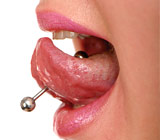 Tongue and other piercings are a current fad or trend, but can often lead to unforeseen problems.
Piercing the tongue and installing a metal ornament called a tongue bolt commonly leads to chipped teeth, sensitivity, and pain. More frequently, it can cause problems with the gums, such as recession, inflammation, infection, bone loss, and even nerve damage.
In one case reported by the American Medical Association, a teenager suffered 20 to 30 daily electrical shocks in many areas of her face after having her tongue pierced and installing a tongue bolt. A neurologist found that the bolt irritated the nerves to her tongue, causing the symptoms. After the bolt was removed, the shocks and symptoms ceased and her tongue healed.
Having the bolts placed may be painful. The tongue is rich in nerves and blood vessels and a lot of bleeding can occur, which can be difficult to stop. Think about how painful it is when you bite your tongue or lip accidentally. And tongue and lip bolts are not generally placed by health professionals or under sterile conditions.
If you are considering getting an oral piercing, make an appointment with us to discuss all the possible ramifications before you make the decision to go ahead. If you already have an oral piercing, be sure to come in for frequent checkups.
Contact us today to schedule an appointment to discuss your questions about oral piercings.
Olivia Newton-John Recalls Daughter’s Teething Troubles
 Singer Olivia Newton-John’s daughter Chloe is now a lovely, grown woman, but Olivia recently recounted to Dear Doctor magazine a rather creative method she found to sooth Chloe’s teething troubles many years ago.
“When Chloe was a baby and teething I remember using a frozen bagel for her sore gums,” Olivia said. “She loved it!”
Cold is often very soothing to a teething child’s gums. In fact, the American Academy of Pediatric Dentistry (AAPD) recommends using a clean, chilled, rubber teething ring, or cold wet washcloth. Chilled pacifiers can also be helpful. Be sure not to freeze teething rings or pacifiers as ice can actually burn sensitive mouth tissues.
Older teethers can sometimes find relieve from cold foods such as popsicles (or bagels!) but make sure your child eats these sugar-containing foods only at mealtimes so as not to promote tooth decay.
If your baby has not yet begun the teething (or tooth-eruption) process, you can expect it to begin usually between six and nine months. It may, however, start as early as three months or as late as twelve months.
Teething symptoms vary among children, as does the length of time it takes for a tooth to make its appearance. But many parents notice the following signs:
- Irritability
- Biting and gnawing
- Gum swelling
- Chin (facial) rash
- Disrupted sleeping patterns
- Ear rubbing
- Drooling
- Decreased appetite
These symptoms are usually most bothersome during the week that the tooth is breaking (erupting) through the gums, starting about four days before and lasting about three days after the tooth appears.
Occasionally, teething discomfort can be considerable. If that is the case with your baby, you can give her or him acetaminophen or ibuprofen in the appropriate dose (check with your pharmacist if you’re not sure what that is). The medicine should be swallowed — not massaged into the gums, as this can also burn. Numbing agents should not be used for children under 2, except under the advice and supervision of a healthcare professional.
If you would like to learn more about teething or any other child-related oral health issue, please contact us for a consultation.
Include a Smile Makeover in Wedding Planning
 For a bride, there is so much to remember when planning the wedding — invitations, a dress, flowers, the site, the caterers, the cake, the photographer — the list goes on and on. In the midst of all these things, don’t let a very important piece of the plan be forgotten — your smile!
Your wedding will be celebrated every year on your anniversary and commemorated in beautiful photos at any time. It is a special occasion you, your family, and your friends will always remember. But how will you and your family look in those photos? You have an opportunity to get makeovers that will make your smiles shine radiantly, and not only in your album. Your makeover will improve your appearance, your self-confidence, and your oral health far into the future.
Start with a visit to your dentist to assess your current situation and discuss your goals and dreams. Each person’s situation will be different. At a minimum you may need a professional cleaning to make sure that your teeth and gums are healthy. Get started on treating any cavities or gingivitis (gum inflammation). If you haven’t already, now is a great time to establish healthy dental hygiene habits including proper daily brushing and flossing.
You may feel that your teeth are discolored and need to be whiter and brighter. Your upper and lower jaws may not meet properly for the most effective biting and chewing. Your teeth may be crowded or misshapen. All these things and more can be modified and repaired with today’s dentistry.
Teeth can be whitened by bleaching in the dentist’s office or with products that can be used at home under a dentist’s supervision.
Orthodontia may be needed to repair your bite. Today orthodontia may be done either with traditional braces, or with clear aligners. Remember that this process works slowly, so start well in advance of your wedding day.
After your teeth are properly aligned, your dental team can work on subtle contouring, overall shape and color changes for individual teeth, using techniques such as porcelain laminate veneers. Temporary veneers can be made so that you can try out your new look before the final installation.
Wedding planning works best when started early. To make sure you, your new spouse, and your family look and feel their best, remember to include smile makeovers in your plan.
Contact us today to discuss your questions about wedding smile makeovers.
 Dr. Nawar Sileewa D.D.S (The Tooth Booth) 32560 Utica Road Fraser , MI 48026
 (586) 293-8530





