

Did You Know? Matinee Idol James Dean Had False Front Teeth!
 Imagine how different things would have been for movie star James Dean, had he not managed to replace the front teeth he lost as a youngster. According to one biography of the 1950s heartthrob, Dean’s teeth were knocked out while he was swinging around on a homemade trapeze. Because his smile was restored, Dean was able to land the plumb movie roles that catapulted him to stardom.
This is perhaps the ultimate example of how a smile makeover can create new opportunities for a person. But opinion polls confirm that nearly 90% of adults feel an attractive smile is an important social and career asset. And, an almost equal percentage of adults feel that their smile could use some improvement.
Are you unhappy with your smile? Is a smile makeover something you’ve ever thought about? Dear Doctor magazine has come up with a great list of questions you can ask yourself to figure out if you would benefit from this life-changing experience:
- Do you avoid smiling in photos?
- Are you conscious about spaces and gaps in your teeth?
- Are your teeth making you look older than you feel?
- Have you held back a smile?
- Do you feel that your teeth are stained or too yellow?
- Do you hold your hand up in front of your mouth when speaking or laughing?
- Do you notice areas of excessive tooth wear that make your smile look older?
- Do you have little teeth and a gummy smile?
- Are your teeth crooked, chipped or crowded?
- Do you wish you had someone else’s smile?
If you answered “yes” to any of these questions, please come in and see us. We have an amazing array of cosmetic procedures available to us — far more than what was available to James Dean in the 1950s. These options range from relatively inexpensive teeth whitening treatments to more permanent cosmetic solutions such as porcelain crowns and veneers. Together we can come up with a plan to give you the smile you’ve always dreamed about.
If you would like more information about what a smile makeover could mean for you, please contact us.
Christie Brinkley’s Tips on Tooth Whitening
 Christie Brinkley’s world-famous smile has graced the covers of countless magazines for over 30 years. In fact, in her own words from an interview with Dear Doctor magazine, the supermodel said, “I think my smile was really my passport to success in the modeling industry.” And while most of her smile’s appeal comes naturally, Christie does give it a boost with good oral hygiene, regular dental checkups and tooth whitening. As Christie says, “When it comes to teeth, keep it as natural as possible. Do not go overboard on whitening. You want your teeth to compliment your faceâ¦your friends should not be required to wear sunglasses when you smile!”
Aside from some potential minor side effects such as tooth sensitivity, whitening teeth through bleaching is a relatively inexpensive way to brighten your smile conservatively and successfully. There are three common methods, as described below:
- An external or vital approach where “vital” (living) teeth are bleached through direct contact to the tooth’s surface.
- An internal or non-vital approach where the tooth is whitened from the inside during a root canal treatment.
- A combination approach in which both internal and external bleaching techniques are used.
But what causes teeth to become discolored?
Tooth discoloration can be caused by a traumatic blow to your teeth resulting in nerve tissue (pulp) death. However, there can be many other causes: consuming or using products that stain the teeth such as coffee, tea, cola, tobacco products and red wine, to name just a few. Aging is another factor, as it results in changes in the mineral structure of the tooth as the enamel, the outermost layer, loses its beautiful and youthful translucency. Other causes include exposure to high levels of fluoride; tetracycline, an antibiotic, administered during childhood; inherited developmental disorders and jaundice in childhood; and tooth decay.
The good news is that we routinely brighten smiles through tooth whitening. if you are ready to have your teeth professionally whitened, contact us today so that we can conduct a thorough examination and discuss your whitening treatment options.
Advanced Periodontal Disease Requires an Aggressive Treatment Strategy
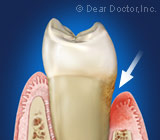 Periodontics is a branch of dentistry that specializes in the supporting structures around the teeth, including the gums and bone, as well as the ligaments that join these structures to the tooth roots. From the Latin peri (“around”) and the Greek odont (“tooth”), periodontics serves one purpose: to keep these supporting structures healthy.
This specialty is critical when it comes to periodontal disease. The term actually refers to a category of inflammatory diseases that affect the periodontal tissues. The inflammation arises from the body’s response to bacterial plaque that has collected at the gum line because of poor oral hygiene. It begins as gingivitis (inflammation of the gums), but if left untreated can develop into periodontitis, which results in bone loss. If left to continue, eventual tooth loss occurs.
Proper oral hygiene and regular cleanings are your best defense against developing periodontal disease in the first place. Once the disease gains a foothold in the area below the gum line, routine brushing and flossing will not be enough. To defeat the disease will require more aggressive treatment.
This usually begins in our office with oral hygiene instruction, scaling and root planing or debridement to rid the root surfaces of plaque and calcified deposits, also referred to as tartar or calculus. This may be followed up with a surgical procedure to remove any remaining pockets that were too deep to resolve with conservative treatment.
Another option we may add to your oral hygiene routine is the use of an anti-microbial mouthrinse, usually containing a 0.12% solution of chlorhexidine. We may also prescribe the use of a topically-applied antibiotic such as tetracycline to stop the infection and promote tissue healing.
Once the disease is arrested, it’s important that you continue good oral hygiene practices. Vigilance and prevention are critical to keeping these all important structures around your teeth healthy and functioning.
If you would like more information on the diagnosis and treatment of periodontal disease, please contact us for a consultation.
 Dr. Nawar Sileewa D.D.S (The Tooth Booth) 32560 Utica Road Fraser , MI 48026
 (586) 293-8530





